The Fall of Black Tulsa: Violence, Policy, and Erasure
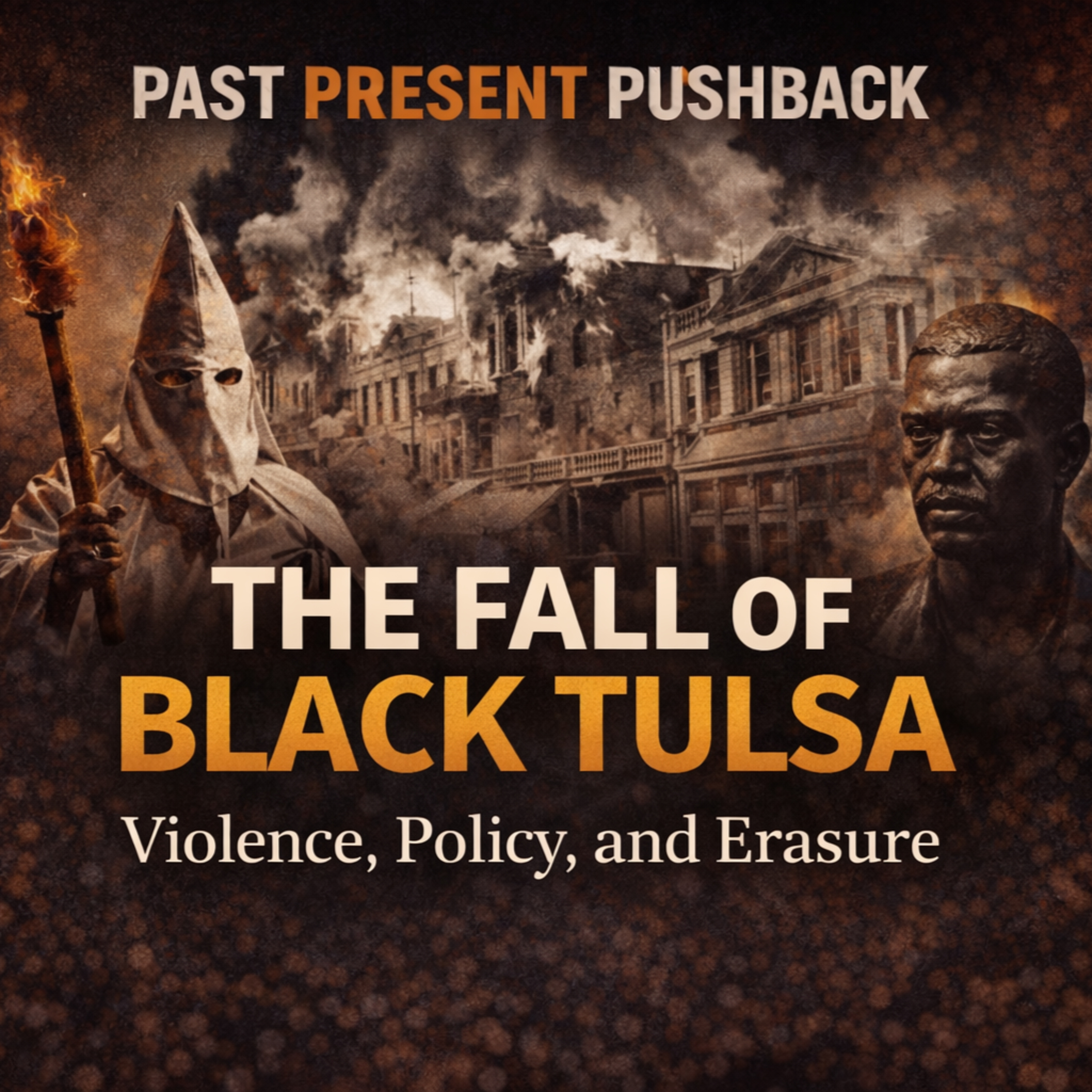


Before Greenwood was erased, it was attacked.
In Part 2 of this two-episode series, Past Present Pushback confronts the truth about the destruction of Black Tulsa’s Greenwood District — known as Black Wall Street — and what really happened after the fires stopped.
XO, AZ, and CDA move beyond the oversimplified “riot” narrative and break down the facts: how a false accusation escalated into organized racial violence, how armed mobs were deputized, how homes and businesses were burned to the ground, and how up to 300 Black residents were killed while authorities looked the other way.
But this episode goes deeper than the violence.
Because the real story didn’t end with flames — it continued through policy.
We examine:
How insurance claims were denied using “riot clauses”
How zoning laws blocked rebuilding efforts
How survivors were detained instead of protected
How the government avoided accountability
And how the massacre was erased from textbooks and history for nearly a century
This wasn’t just destruction.
It was systematic removal of Black wealth, power, and memory.
The question isn’t simply what happened in 1921.
It’s why it was buried — and what that silence protected.
If Part 1 showed how Greenwood was built,
Part 2 reveals how violence, bureaucracy, and erasure combined to make sure it couldn’t rise again.
Because you can’t talk about a racial wealth gap without first acknowledging racial wealth theft.
This is history without filters.
This is accountability without euphemisms.
This is Past Present Pushback.

